
Gonadal Vein Embolization
What It Is and What to Expect

What is gonadal vein embolization?
Gonadal vein embolization, often called ovarian vein embolization in women, is a minimally invasive outpatient treatment used when refluxing ovarian or pelvic veins are contributing to pelvic congestion syndrome symptoms. The goal is to block abnormal veins so blood no longer pools in the pelvis.
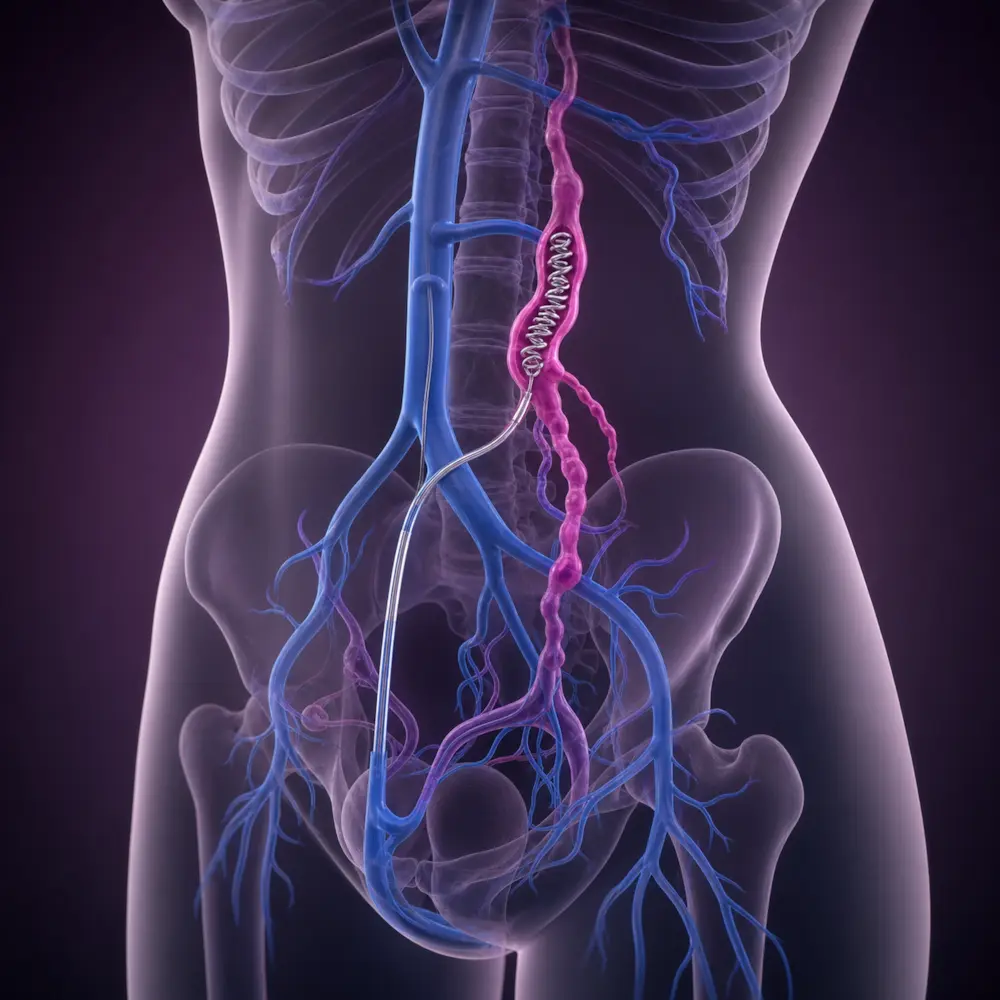
How the procedure works.
During embolization, a thin catheter is guided through a vein — typically accessed at the neck or groin — to the ovarian or pelvic veins. Contrast dye is used to confirm abnormal flow and identify the refluxing vessels. Coils, foam, glue, or other embolic materials are then used to block the vein and reduce reflux. Once the abnormal vein is sealed, blood reroutes through healthy channels.
Key facts:
- No surgical incisions
- No general anesthesia
- Outpatient procedure — same-day discharge in most cases
- Procedure typically 60–90 minutes
- Performed by an interventional radiologist under imaging guidance
WHO MAY BE CONSIDERED FOR THIS PROCEDURE?
Women considered for embolization usually have:
- Chronic pelvic pain or heaviness with a symptom pattern consistent with PCS
- Imaging evidence of pelvic venous reflux or varices (enlarged, incompetent pelvic or ovarian veins)
- Symptoms that have persisted despite conservative management
- Other causes of chronic pelvic pain assessed or ruled out
The procedure is considered after appropriate evaluation — not as a first-line test or treatment. Candidacy is determined by symptom pattern, imaging findings, and clinical judgment.




Recovery and follow-up
Embolization is typically an outpatient procedure. Most patients go home a few hours after the procedure.
What to expect after treatment:
- Temporary pelvic discomfort is common in the first several days as treated veins inflame and close
- Light activity is usually permitted within 24–48 hours
- Strenuous activity, heavy lifting, and sexual activity are typically restricted briefly after the procedure
- Normal activity gradually resumes over 1–2 weeks
- Follow-up imaging or appointments are scheduled based on symptoms and clinical response
Symptom improvement is gradual — most patients notice reduction in heaviness and pain over weeks to months as the embolized veins are absorbed. Not all patients respond equally, and symptom recurrence can occur in some cases, which is why follow-up remains important.
Risks, benefits, and realistic expectations
Embolization is minimally invasive and complications are uncommon, but no procedure is without risk. Potential risks include:
- Temporary post-procedural pelvic pain or cramping
- Coil or embolic material migration (rare)
- Non-target embolization (rare)
- Symptom recurrence requiring repeat treatment
Most reported complications are minor. The overall success rate for symptom improvement in appropriately selected patients is meaningful, but results vary based on the anatomy, extent of reflux, and individual response.
Embolization is not a cure for all chronic pelvic pain — it is a targeted treatment for the venous component. Patients with PCS alongside other pelvic conditions may have partial rather than complete symptom relief.
Frequently asked questions
No. It is an endovascular, minimally invasive catheter-based procedure. There are no incisions and no general anesthesia.