
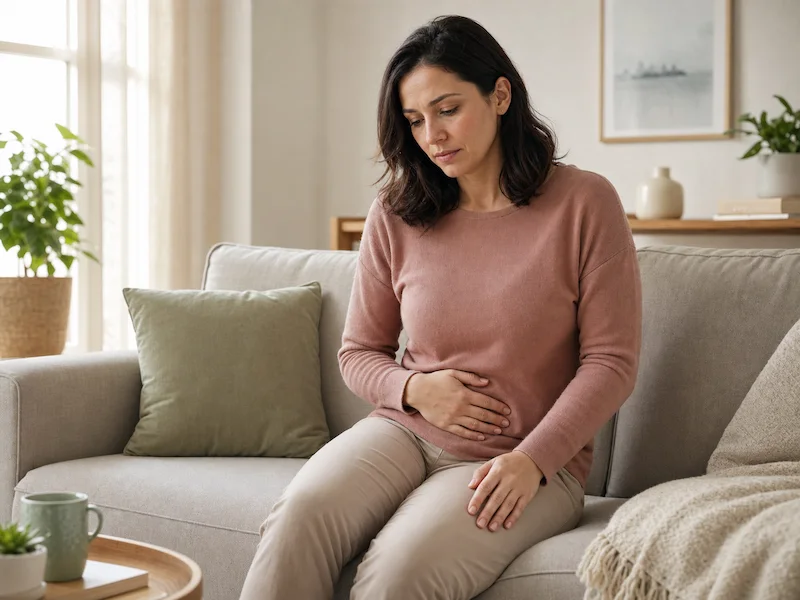
A heavy, full, or dragging sensation in the pelvis can be difficult to describe—and even harder to ignore. Some people notice it after standing for a long time, near their menstrual period, during or after sex, or at the end of the day. Others feel constant pressure that gradually begins to interfere with work, exercise, sleep, or intimacy.
Pelvic heaviness is a symptom, not a diagnosis. It may come from the veins, pelvic floor, uterus, ovaries, bladder, or bowel. The pattern of your symptoms can offer clues, but an exam and sometimes imaging are needed to identify the cause.
What does pelvic heaviness feel like?
People describe chronic pelvic pressure in different ways, including:
- A dull ache, fullness, or “weighted” feeling in the lower abdomen
- A dragging or pulling sensation in the pelvis or vagina
- Pressure that worsens after prolonged standing or sitting
- Discomfort around the menstrual period or after sex
- Pelvic pain accompanied by urinary, bowel, or menstrual changes
Because several conditions can cause similar symptoms, avoid assuming that pelvic pressure is “just part of getting older” or something you must tolerate.
8 possible causes of chronic pelvic pressure
1. Pelvic congestion syndrome
Pelvic congestion syndrome (PCS) occurs when veins in the pelvis become enlarged and blood pools instead of flowing efficiently back toward the heart. The result can be a deep ache, heaviness, or pressure that often becomes worse as the day goes on.
PCS symptoms may intensify after standing or sitting for long periods, before or during menstruation, during or after intercourse, or after pregnancy. Some people also develop visible varicose veins around the vulva, buttocks, or upper thighs. A vascular specialist or interventional radiologist may use ultrasound, CT, MRI, or venography to evaluate the pelvic veins.
2. Pelvic organ prolapse
Pelvic organ prolapse happens when weakened muscles and connective tissue allow the bladder, uterus, rectum, or top of the vagina to descend. It can cause pelvic pressure or fullness, a vaginal bulge, lower back discomfort, urine leakage, difficulty emptying the bladder, or problems with bowel movements.
Pregnancy and vaginal childbirth are common risk factors, but prolapse can also be associated with aging, menopause, chronic constipation, coughing, repeated heavy lifting, and increased abdominal pressure.
3. Uterine fibroids
Fibroids are noncancerous growths that develop in or around the uterus. Depending on their size and location, they may create a sense of fullness or pressure in the lower abdomen. Other clues include heavy or prolonged periods, bleeding between periods, frequent urination, constipation, lower back pain, and pain during sex.
A pelvic exam and ultrasound are commonly used to look for fibroids. Treatment depends on the symptoms, fibroid characteristics, age, and future pregnancy plans.
4. Endometriosis or adenomyosis
Endometriosis occurs when tissue similar to the uterine lining grows outside the uterus. Adenomyosis develops when similar tissue grows into the muscular wall of the uterus. Both can contribute to pelvic aching, pressure, painful periods, pain during sex, and sometimes bowel or bladder symptoms that follow the menstrual cycle.
Symptoms do not always match the extent of disease, so persistent cyclical pain deserves a medical evaluation even if a prior routine exam was normal.
5. Ovarian cysts or other ovarian conditions
Many ovarian cysts are harmless and resolve without treatment, but a larger cyst can cause pressure, bloating, or pain—sometimes more noticeably on one side. Sudden severe pain, especially with nausea or vomiting, needs urgent assessment because it can signal cyst rupture or twisting of the ovary.
Persistent bloating, pelvic pressure, feeling full quickly, or unexplained urinary changes should also be discussed promptly with a clinician. These symptoms are often caused by benign conditions, but they still warrant evaluation.
6. Bladder conditions
A urinary tract infection can cause lower pelvic pressure along with burning, urgency, or frequent urination. When symptoms last or recur without an infection, interstitial cystitis—also called bladder pain syndrome—may be considered. It can cause pressure or tenderness in the lower abdomen and pelvis, urinary urgency and frequency, and discomfort that changes as the bladder fills or empties.
7. Constipation or other bowel conditions
The bowel sits within the pelvis, so constipation, trapped gas, or irritable bowel syndrome can feel like pelvic fullness or pressure. Symptoms may include bloating, straining, hard or infrequent stools, or discomfort that improves after a bowel movement. New, persistent, or worsening bowel changes—especially with blood in the stool, weight loss, or fever—should be evaluated.
8. Pelvic floor muscle dysfunction
The pelvic floor muscles can become weak, overly tight, poorly coordinated, or painful. This may create heaviness, aching, painful intercourse, urinary urgency, constipation, or a feeling that the bladder or bowel does not empty completely. Pelvic floor physical therapy can help some people, but treatment should be based on an assessment—strengthening exercises are not appropriate for every pelvic floor problem.
When should you seek urgent care?
Seek urgent medical attention for pelvic pressure or pain accompanied by:
- Sudden, severe, or rapidly worsening pain
- Fainting, dizziness, weakness, or shoulder pain
- Heavy vaginal bleeding
- Fever, chills, persistent vomiting, or feeling very unwell
- A positive pregnancy test or possible pregnancy
- Inability to urinate or pass stool
These signs can occur with conditions that require prompt treatment, including ectopic pregnancy, ovarian torsion, significant bleeding, or infection.
How is chronic pelvic pressure evaluated?
Your clinician may ask when the pressure began, what makes it better or worse, whether it changes with your menstrual cycle, and whether you have urinary, bowel, sexual, or pregnancy-related symptoms. Evaluation may include a pelvic exam, urine or pregnancy testing, blood work, and pelvic ultrasound. Depending on the suspected cause, CT, MRI, specialized venous ultrasound, or referral to a gynecologist, urogynecologist, urologist, gastroenterologist, pelvic floor therapist, or vascular specialist may be appropriate.
A brief symptom diary can help. Record the timing and intensity of the pressure, menstrual cycle dates, time spent standing, bowel and bladder changes, pain during or after sex, and anything that relieves the symptoms.
Could pelvic congestion syndrome be the cause?
PCS is sometimes overlooked because its symptoms overlap with gynecologic, urinary, and bowel conditions. Pelvic heaviness that worsens after prolonged standing, later in the day, around menstruation, or after intercourse may be a reason to ask whether the pelvic veins should be evaluated.
This article is for general educational purposes and is not a substitute for diagnosis or treatment from a qualified healthcare professional.


