
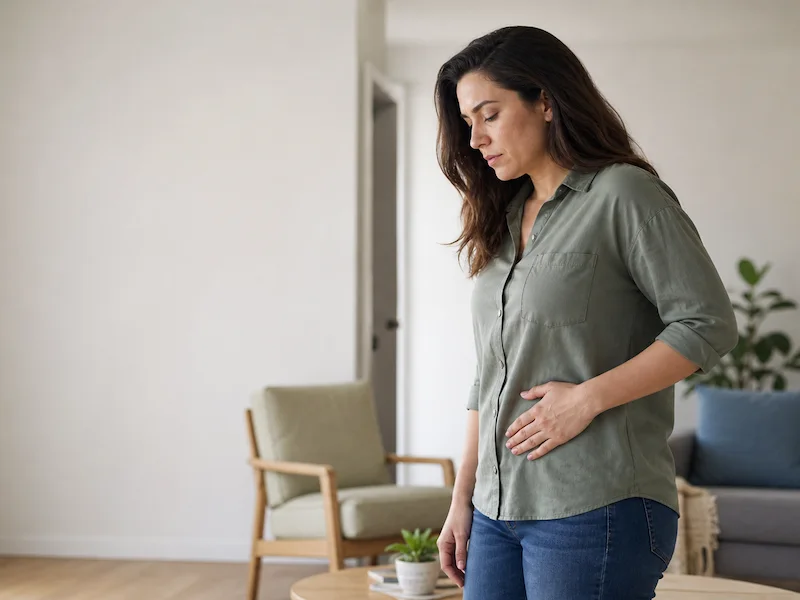
Pelvic pain that gets worse when you stand and improves when you lie down can point to a pressure- or circulation-related problem in the pelvis. One possible cause is pelvic congestion syndrome (PCS), a condition involving enlarged pelvic veins and backward blood flow. However, this pattern is not specific to PCS. Pelvic floor problems, prolapse, musculoskeletal conditions, and other gynecologic, urinary, or bowel disorders can cause similar symptoms.
The timing matters. If your pain builds after hours on your feet, becomes strongest late in the day, and eases after you recline, tell your clinician. That positional pattern can be an important clue during a pelvic congestion syndrome evaluation.
Why can standing make pelvic pain worse?
Standing changes how gravity affects blood, muscles, joints, and pelvic organs. When you are upright, blood must travel upward from the legs and pelvis toward the heart. Healthy veins use one-way valves and muscle movement to support that return flow. If pelvic veins are enlarged or their valves do not work effectively, blood may flow backward and pool in the pelvis.
As the day goes on, increased pressure can stretch affected veins and irritate nearby tissues or nerves. The result may feel like a dull ache, heaviness, fullness, throbbing, or dragging sensation rather than a sharp, pinpoint pain. Lying down reduces the effect of gravity, which may lower venous pressure and allow symptoms to settle.
This is why pain that is worse with prolonged standing and better when lying flat is often discussed in connection with pelvic venous insufficiency and PCS. It is a useful clue, but it cannot confirm a diagnosis by itself.
Could pelvic congestion syndrome cause this pattern?
Yes. Pelvic congestion syndrome is one possible explanation for chronic pelvic pain that worsens while standing and improves with rest. PCS occurs when blood does not move efficiently through veins in the pelvis. The veins may become enlarged, twisted, and overfilled.
Symptoms commonly associated with PCS include:
- A dull, aching, heavy, or pressure-like pain in the lower abdomen or pelvis
- Pain that builds after prolonged standing, walking, or sitting
- Symptoms that become worse late in the day
- Pain during or after sexual intercourse
- Increased discomfort before or during a menstrual period
- Pelvic heaviness after pregnancy or with additional pregnancies
- Visible varicose veins around the vulva, buttocks, or upper thighs
- Leg heaviness, swelling, urinary urgency, or lower-back discomfort
PCS is only one of several possible causes of chronic pelvic pressure and heaviness. A clinician should consider the complete symptom pattern rather than relying on one feature.
Other reasons pelvic pain may worsen when standing
Pelvic organ prolapse
Weakness in the muscles and connective tissues that support the bladder, uterus, rectum, or vagina can allow one or more organs to descend. Prolapse may cause pressure, a vaginal bulge, lower-back discomfort, bladder leakage, or difficulty with bowel movements. Symptoms often increase after standing, lifting, or being active and may improve when lying down.
Pelvic floor muscle dysfunction
Pelvic floor muscles may be weak, overly tight, painful, or poorly coordinated. Standing and movement can increase the workload on these muscles. Pelvic floor dysfunction may also cause painful sex, constipation, urinary urgency, or a feeling that the bladder or bowel does not empty completely. Because both weakness and excessive tension can cause pain, exercises should be recommended after an assessment rather than chosen by guesswork.
Musculoskeletal or nerve-related pain
Problems involving the hips, lower back, sacroiliac joints, abdominal wall, or pelvic nerves can refer pain into the pelvis. These conditions may change with posture, walking, movement, or weight-bearing. Pain that is sharply linked to a specific motion may suggest a musculoskeletal component, although more than one condition can occur at the same time.
Gynecologic, bladder, or bowel conditions
Endometriosis, adenomyosis, fibroids, ovarian cysts, bladder pain syndrome, urinary infection, constipation, and irritable bowel syndrome can all cause pelvic discomfort. Their symptoms may fluctuate with the menstrual cycle, urination, bowel movements, sex, meals, or activity. Positional relief does not automatically rule these conditions in or out.
What symptom details should you track?
A brief symptom diary can make an appointment more productive. For one or two weeks, record:
- When the pain begins and how long it lasts
- How long you were standing, sitting, walking, or exercising beforehand
- Whether lying down helps, and how quickly
- Where you feel the pain and whether it is one-sided
- Whether symptoms change with your period, sex, urination, or bowel movements
- Pregnancy history and any visible vulvar or upper-thigh varicose veins
- Associated bleeding, discharge, bloating, nausea, urinary changes, constipation, fever, or weight loss
You can also review common questions about symptoms and treatment in the pelvic congestion syndrome FAQ.
How is positional pelvic pain evaluated?
Evaluation usually begins with a medical history and physical examination. Depending on your symptoms, a clinician may recommend a pregnancy test, urine testing, blood work, a pelvic exam, or pelvic ultrasound. Imaging such as CT or MRI may help evaluate pelvic organs and veins.
When PCS is suspected, a provider with experience in pelvic venous disorders may use specialized ultrasound, CT venography, MR venography, or catheter venography. Imaging findings must be interpreted alongside symptoms because enlarged pelvic veins can sometimes be present without causing pain.
If you need an experienced provider, the pelvic congestion syndrome doctor directory can help you locate a specialist.
What treatments may help?
Treatment depends on the cause. A clinician may recommend activity adjustments, medication, pelvic floor physical therapy, treatment for a bladder or bowel condition, or management of a gynecologic disorder. Resting with the legs elevated may temporarily reduce a venous ache, but symptom relief from lying down does not replace an evaluation.
For appropriately selected patients with symptomatic pelvic venous reflux, a minimally invasive procedure may be considered. Gonadal vein embolization closes problematic veins so blood can reroute through healthier pathways. Candidacy should be based on symptoms, examination, imaging, and a discussion of expected benefits and risks.
When should pelvic pain receive urgent care?
Seek urgent medical attention for sudden or severe pelvic pain, pain that is rapidly worsening, fainting or dizziness, heavy vaginal bleeding, fever or chills, persistent vomiting, difficulty breathing, a rigid or very tender abdomen, or pain during a possible pregnancy. Sudden one-sided pain with nausea or vomiting can be an emergency. New pain with blood in the urine or stool, inability to urinate or pass stool, or significant weakness also needs prompt assessment.
Even when symptoms are not urgent, schedule a medical evaluation if pelvic pain persists, returns regularly, worsens over time, or interferes with sleep, exercise, work, or intimacy.
Frequently asked questions
Is pain that improves when lying down always pelvic congestion syndrome?
No. PCS can produce this pattern, but prolapse, pelvic floor dysfunction, and musculoskeletal problems may also improve with rest. Diagnosis requires an evaluation of your complete history, examination, and sometimes imaging.
Why is pelvic pain often worse at the end of the day?
Hours of standing or sitting can increase pressure in affected pelvic veins and load the muscles and support structures of the pelvis. The accumulating effect may make pain, pressure, or heaviness more noticeable later in the day.
Can pelvic congestion syndrome be seen on a routine ultrasound?
Sometimes, but a routine pelvic ultrasound may focus mainly on the uterus and ovaries. If pelvic venous disease is suspected, the order and imaging technique may need to specifically evaluate vein size, blood-flow direction, and changes with position or pressure.
What type of doctor evaluates pelvic pain that worsens with standing?
A primary-care clinician or gynecologist can begin the evaluation. Depending on the findings, care may also involve an interventional radiologist or vascular specialist, urogynecologist, urologist, gastroenterologist, or pelvic floor physical therapist.
This article is for general educational purposes and is not a substitute for diagnosis or treatment from a qualified healthcare professional.


