
Pelvic Congestion Syndrome Symptoms & Pelvic Vein Pain
Pelvic venous disorders often cause a symptom pattern that is different from the cramping.
Pelvic venous disorders often cause a symptom pattern that is different from the cramping, acute, or highly cyclical pain many women expect from other pelvic conditions. The most common symptom is pelvic pain lasting more than 6 months that feels dull, achy, or heavy and gets worse with standing, walking, sitting, sex, or as the day progresses.

The symptoms most associated with pelvic congestion syndrome.
The hallmark symptom is chronic pelvic pain or heaviness. Many women describe the feeling as fullness, dragging, pressure, or a deep ache in the pelvis rather than a sharp, stabbing pain.
Common symptoms:
- Pelvic heaviness or pressure
- Dull aching pelvic pain lasting more than 6 months
- Pain worse at the end of the day
- Pain worse after prolonged standing or sitting
- Pain that improves when lying down
- Pain during or after intercourse (dyspareunia)
- Low back discomfort or leg heaviness
- Vulvar, perineal, buttock, or upper-thigh varicose veins
- Urinary urgency, bloating, or pelvic fullness in some women
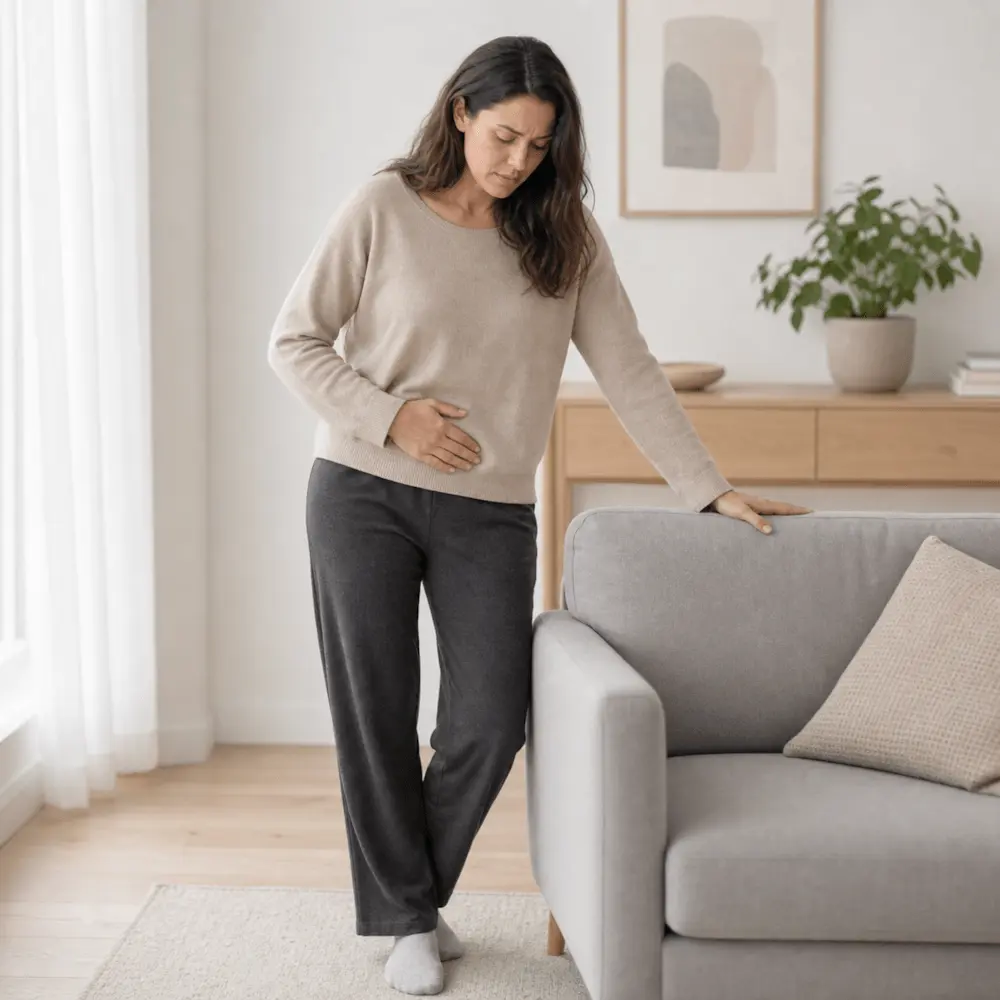
Why standing makes symptoms worse.
Pelvic vein-related symptoms often worsen when you are upright because gravity and venous reflux allow blood to pool in abnormal ovarian or pelvic veins. Lying down reduces the venous pressure and can temporarily relieve the aching or heaviness. That upright-versus-recumbent pattern is one of the most useful clues that symptoms may be vein-related.
Could it be your pelvic veins?
Pelvic veins can become enlarged, twisted, and incompetent, allowing blood to flow backward and pool in the pelvis. That venous congestion creates the heavy, aching, pressure-like symptoms many women feel but struggle to explain. Think of pelvic vein problems as varicose veins of the pelvis. Instead of efficiently carrying blood away, the veins become dilated and allow reflux — increasing pressure and creating pain, heaviness, or a dragging sensation. This process is one reason pelvic congestion syndrome is often described as a venous cause of chronic pelvic pain.
Who is more likely to fit this pattern?
PCS most often affects women between 20 and 45 who have given birth, especially more than once. Pregnancy is thought to contribute because veins enlarge during pregnancy and those changes may not fully reverse afterward.
Additional risk factors include varicose veins, prior pelvic surgery, anatomical compression syndromes, and estrogen-related influences. Not every woman with enlarged pelvic veins has symptoms, but symptoms plus the right history plus imaging findings make the diagnosis more likely.
When to seek urgent care
Not all pelvic pain is pelvic congestion syndrome. Sudden severe pain, fever, fainting, heavy bleeding, or acute unilateral pain with concerning symptoms needs urgent medical evaluation — those patterns can reflect a very different and more urgent problem. PCS is a chronic, non-emergent pattern rather than an abrupt emergency presentation.
Why is Diagnosis often overlooked?
PCS is often missed because chronic pelvic pain has many possible causes, and some women with enlarged veins do not have pain. Clinicians often rule out more common gynecologic, gastrointestinal, urinary, and musculoskeletal conditions first, which can delay a focused venous evaluation.
Many women wait years for a diagnosis — told that imaging is normal, that their pain is hormonal, or that there is nothing structurally wrong. If that sounds familiar and your pain follows the venous pattern described above, a targeted pelvic vein evaluation may be the missing step.
When chronic pelvic pain may not be “just pelvic pain”
Chronic pelvic pain has many causes, which is exactly why pelvic venous disorders are often missed. Pelvic vein-related pain is more likely when:
- Pain feels heavy, dull, aching, or pressure-like
- It has lasted more than 6 months
- It worsens with prolonged standing or sitting
- It improves with lying down
- It is associated with dyspareunia, low back pain, or pelvic or lower-extremity varices
Symptoms that may suggest other causes: sharp or acute pain, fever-related pain, clearly GI-triggered pain, sudden severe onset, or signs of infection or bleeding. Those patterns need urgent non-PCS evaluation.
IMPORTANT: These symptom patterns are clues, not a diagnosis. A clinician must assess other causes of pelvic pain and correlate symptoms with imaging findings before concluding that PCS is the main driver.